
Swimming

Introduction
Swimming is a low-impact sport that is easy on the joints and offers full-body conditioning. While it is generally safe and beneficial for overall fitness, competitive swimmers can still face injuries, often due to repetitive movements and overuse.

Common Injuries

  1. Swimmer’s Shoulder: Pain and inflammation in the shoulder joint caused by repetitive overhead movements like freestyle and butterfly strokes.
  2. Knee Injuries: Often referred to as “Breaststroker’s Knee,” this condition results from the repetitive frog kick motion, leading to pain and swelling in the knee joint.
  3. Lower Back Pain: Due to improper body position or overuse, swimmers can experience muscle strains in the lower back.
  4. Elbow Injuries: Overuse of the arm during strokes can lead to tendinitis or pain in the elbow.
  5. Ankle Sprains: Although less common, swimmers can strain or twist their ankles, particularly during starts or turns.
  6. Neck Pain: The repetitive motion of turning the head during freestyle can lead to muscle strains or stiffness.

Causes

  1. Repetitive strokes, improper technique, overtraining, lack of warm-up, or poor flexibility.

Prevention

  1. Proper warm-up and cool-down routines, stretching to improve flexibility, improving stroke technique, and cross-training to reduce repetitive strain.

Treatment

  1. Rest & Ice: Rest the injured area and apply ice for pain relief and to reduce inflammation.
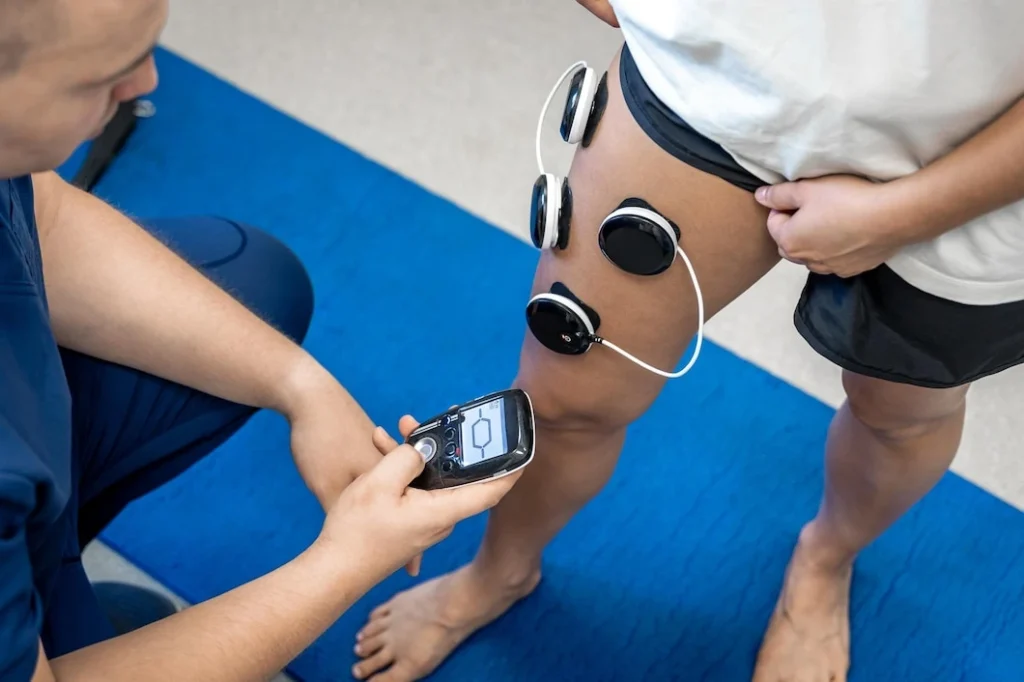
  2. Physiotherapy: Rehabilitation through strengthening exercises, flexibility training, and technique correction.
  3. Medication: NSAIDs to reduce pain and inflammation.
  4. Compression & Elevation: To manage swelling in cases of sprains or strains.
  5. Surgery: In severe cases, such as tendon tears, surgery may be needed.
  6. Rehabilitation: Gradual return to swimming with targeted exercises to prevent re-injury and improve strength and flexibility.
