Introduction
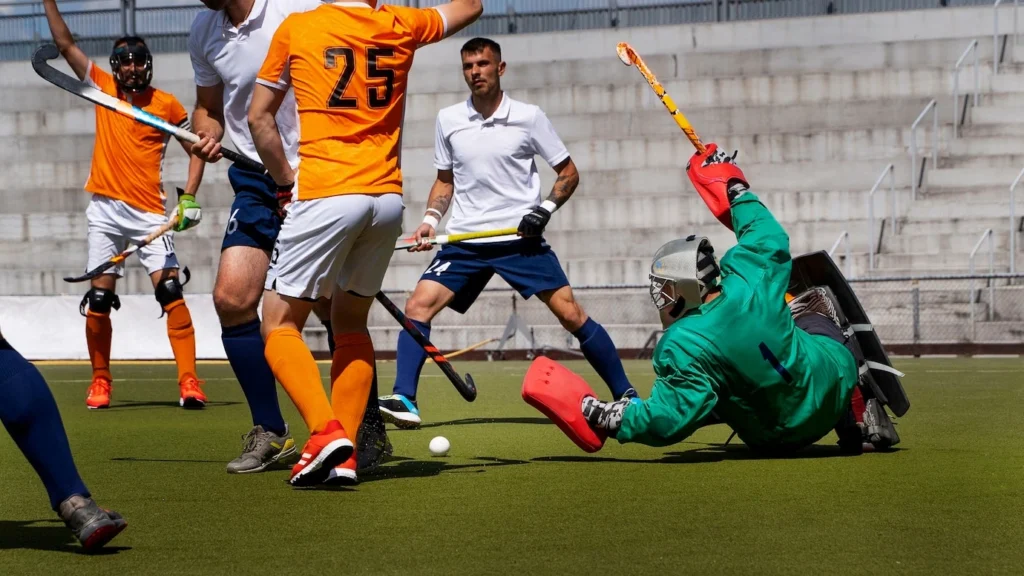
Hockey is a fast-paced, physically demanding sport requiring skill, speed, and agility. The high intensity of the game, combined with frequent collisions and quick direction changes, makes players vulnerable to a range of injuries.
Common Injuries
- Sprains and Strains: Most commonly affect the ankles, knees, and wrists due to rapid movements and falls.
- Shoulder Injuries: Dislocations, fractures, or rotator cuff injuries from falls, collisions, or heavy contact with the ball/puck.
- Groin and Hip Injuries: Muscle strains due to sudden changes in direction and quick lateral movements.
- Concussions: Result from head impacts, whether from an accidental collision with another player, stick, or the ground.
- Knee Injuries: ACL, PCL tears, and meniscus injuries from abrupt changes in direction or contact with players.
- Hand and Finger Injuries: Fractures, dislocations, or sprains from direct hits by the ball/puck or from blocking shots.
- Fractures: Often caused by falls, collisions, or impacts with the ball or stick.
Causes
- Sudden movements, aggressive tackling, impact from the ball/puck or stick, and overuse injuries from repetitive motions.
Prevention
- Proper warm-ups and cool-downs, strength training, flexibility exercises, wearing protective gear (like helmets, pads, and gloves), and technique improvement to avoid risky plays.
Treatment
- Rest & Ice: Immediate rest and ice application to reduce pain and swelling, especially for sprains and strains.
- Compression & Elevation: Helps reduce swelling and supports recovery.
- Physiotherapy: Rehabilitation exercises for muscle strains, joint injuries, and post-surgery recovery.
- Medication: NSAIDs to manage pain and inflammation.
- Surgery: For severe fractures or ligament tears, surgical intervention may be necessary.
- Rehabilitation: Gradual return to play with exercises to restore strength, flexibility, and mobility, and to prevent future injuries.