
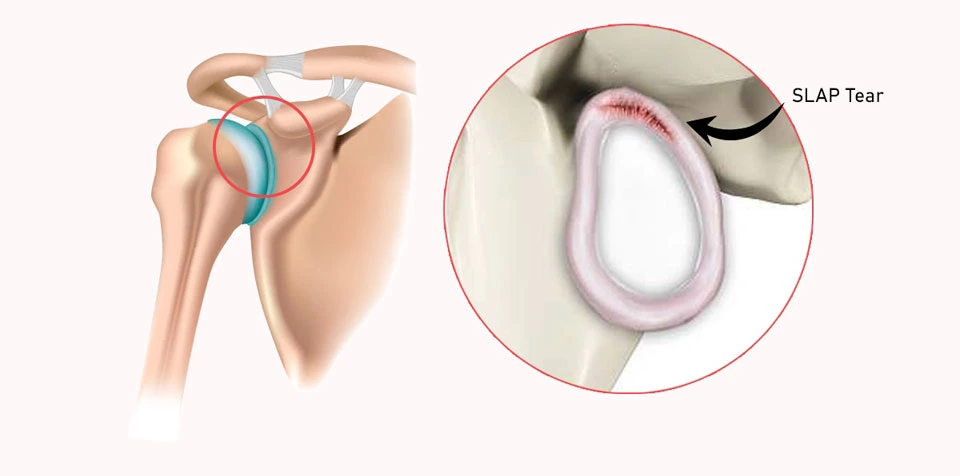
A SLAP (Superior Labrum Anterior and Posterior) tear is an injury to the labrum, a ring of cartilage that surrounds the shoulder socket, helping to stabilize the joint. This specific type of tear affects the top (superior) part of the labrum, where the biceps tendon attaches, and can extend in both anterior (front) and posterior (back) directions. SLAP tears are common in athletes, particularly those involved in sports requiring repetitive overhead motions, such as baseball, tennis, and swimming, but can also result from trauma or age-related wear and tear.
Repetitive Overhead Motion: Activities that involve repeated overhead movements, like throwing, swimming, or lifting weights, place significant stress on the shoulder joint and can lead to a SLAP tear over time.
Acute Trauma: A fall on an outstretched arm, a sudden pull, or a direct blow to the shoulder (such as during contact sports) can cause a SLAP tear.
Sudden Lifting or Pulling: Lifting heavy objects or a sudden jerking motion (e.g., trying to catch oneself from falling) can strain the labrum and lead to a tear.
Aging and Degeneration: In people over 40, normal wear and tear can lead to degeneration of the labrum, increasing the likelihood of a SLAP tear.
Non-Surgical Management (RICE Protocol):
Physical Therapy: A structured therapy program can help improve strength, restore range of motion, and relieve pain. Exercises focus on strengthening the rotator cuff muscles and stabilizing the shoulder joint, with a gradual progression to include resistance and functional movements.
Medications: NSAIDs like ibuprofen may help alleviate pain and inflammation, allowing more comfortable movement and exercise.
Injections: Corticosteroid injections may be used to reduce inflammation and provide temporary pain relief, but these are typically used sparingly and under medical supervision.
Surgical Repair: For severe or persistent SLAP tears that don’t respond to conservative treatment, arthroscopic surgery may be necessary. Surgical options include:
Rehabilitation Post-Surgery: After surgery, a gradual rehabilitation program is essential to restore shoulder strength, flexibility, and stability. Early exercises will focus on passive movements, progressing to active and resistance exercises to ensure a full recovery.
With the right treatment and rehabilitation plan, most individuals with a SLAP tear can achieve full recovery, restore shoulder function, and safely return to their activities or sports with minimal risk of long-term issues.

Expert in trauma care, sports medicine, joint replacement, and deformity correction, delivering advanced orthopedic solutions with precision and care.
Copyright @ 2024. All rights reserved. Designed by AppAdd India Pvt Ltd…