
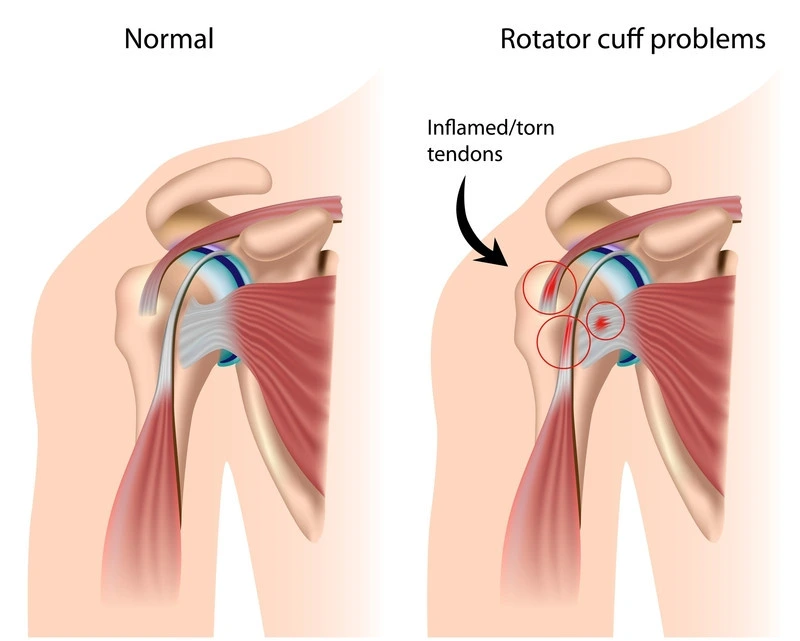
Rotator cuff injuries involve damage to any of the four muscles and tendons that stabilize the shoulder joint and facilitate arm movement: the supraspinatus, infraspinatus, teres minor, and subscapularis. These injuries are common, particularly in people who perform repetitive overhead motions or those who experience acute trauma to the shoulder. Rotator cuff injuries range from tendinitis (inflammation) to partial or complete tears, which can cause pain, weakness, and limited shoulder function.
Overuse and Repetitive Motion: Frequent, repetitive overhead motions, often seen in sports like swimming, baseball, or tennis, place strain on the rotator cuff tendons, causing micro-tears and inflammation.
Acute Trauma: A sudden injury, such as falling on an outstretched arm or lifting something too heavy, can lead to a rotator cuff tear or strain.
Age-Related Degeneration: Over time, wear and tear can weaken the rotator cuff, making it more prone to injury, especially in people over the age of 40.
Poor Posture and Muscle Imbalance: Poor shoulder mechanics and imbalances in shoulder muscles can increase strain on the rotator cuff, increasing injury risk.
Lack of Flexibility: Limited shoulder flexibility can put added stress on the rotator cuff during movement, contributing to injury.
Non-Surgical Management (RICE Protocol):
Physical Therapy: Physical therapy is essential for restoring shoulder strength and mobility. Exercises focus on strengthening the rotator cuff muscles, improving range of motion, and stabilizing the shoulder. Stretching exercises are also incorporated to enhance flexibility and prevent future injuries.
Anti-Inflammatory Medications: NSAIDs like ibuprofen can help manage pain and reduce inflammation.
Steroid Injections: Corticosteroid injections can provide temporary pain relief and reduce inflammation, making it easier to perform exercises, though they are typically used sparingly to avoid tendon weakening.
Platelet-Rich Plasma (PRP) Injections: In some cases, PRP injections may be used to promote healing in the rotator cuff, although research is ongoing.
Surgical Repair: For severe rotator cuff tears or injuries that do not improve with conservative treatment, surgery may be required. Surgical options include:
Rehabilitation Post-Surgery: Post-surgical rehabilitation is crucial for restoring shoulder strength, flexibility, and range of motion. Rehab exercises are introduced gradually, beginning with gentle movements and progressing to strengthening and functional exercises.
With proper treatment and a structured rehabilitation program, individuals with rotator cuff injuries can achieve significant pain relief, regain shoulder function, and return to their usual activities with minimized risk of future injury.

Expert in trauma care, sports medicine, joint replacement, and deformity correction, delivering advanced orthopedic solutions with precision and care.
Copyright @ 2024. All rights reserved. Designed by AppAdd India Pvt Ltd…