
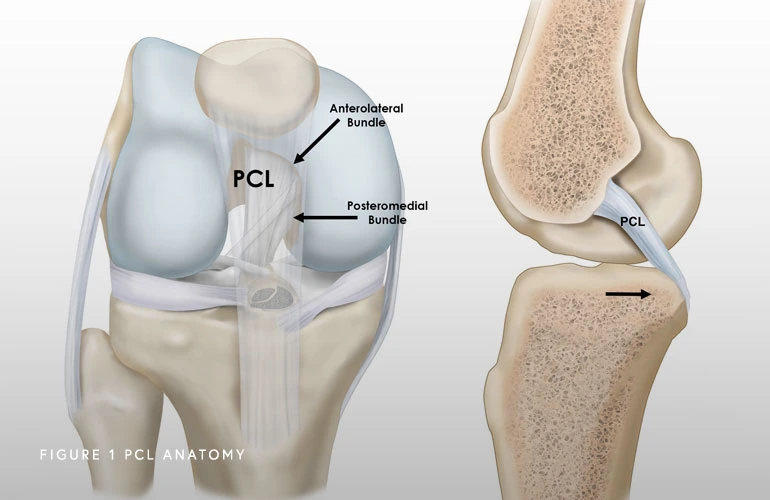
A PCL (Posterior Cruciate Ligament) tear is an injury to the ligament located at the back of the knee that connects the thigh bone (femur) to the shin bone (tibia). The PCL helps stabilize the knee by preventing the tibia from moving too far backward. PCL tears are less common than ACL injuries but can cause significant knee instability and discomfort. They frequently occur due to trauma, such as falls or direct impact to the knee.
Direct Impact: A strong blow to the front of the knee, often occurring in sports, car accidents, or falls, can force the tibia backward, leading to a PCL tear.
Hyperextension or Overstretching: Hyperextending the knee beyond its normal range can overstress the PCL and result in a tear.
Sudden Twisting Movements: Rapid twists, especially when the foot is planted, may cause both ACL and PCL damage, particularly in high-impact sports.
Contact Sports and High-Risk Activities: Sports like football, basketball, skiing, and soccer increase the risk of PCL tears due to frequent falls, impact, and rapid changes in direction.
Non-Surgical Management (RICE Protocol):
Physical Therapy: Strengthening and rehabilitation exercises focus on restoring knee stability and building the surrounding muscles, especially the quadriceps and hamstrings. Therapy may be the primary treatment for partial PCL tears or as a post-surgery recovery plan.
Knee Brace or Support: A knee brace may be recommended to stabilize the joint and protect the PCL while it heals.
Surgical Reconstruction: For complete PCL tears or tears causing significant instability, surgery may be recommended. PCL reconstruction usually involves replacing the damaged ligament with a graft from either the patient’s tissue or a donor.
Rehabilitation: Post-surgery or therapy, a structured rehabilitation plan is crucial for a complete recovery. Rehabilitation exercises focus on regaining strength, stability, and range of motion gradually and safely.
PCL tear rehabilitation is essential for those aiming to regain full knee functionality and maintain an active lifestyle. With proper treatment, individuals with PCL tears can return to their activities with minimal risk of long-term issues.

Expert in trauma care, sports medicine, joint replacement, and deformity correction, delivering advanced orthopedic solutions with precision and care.
Copyright @ 2024. All rights reserved. Designed by AppAdd India Pvt Ltd…