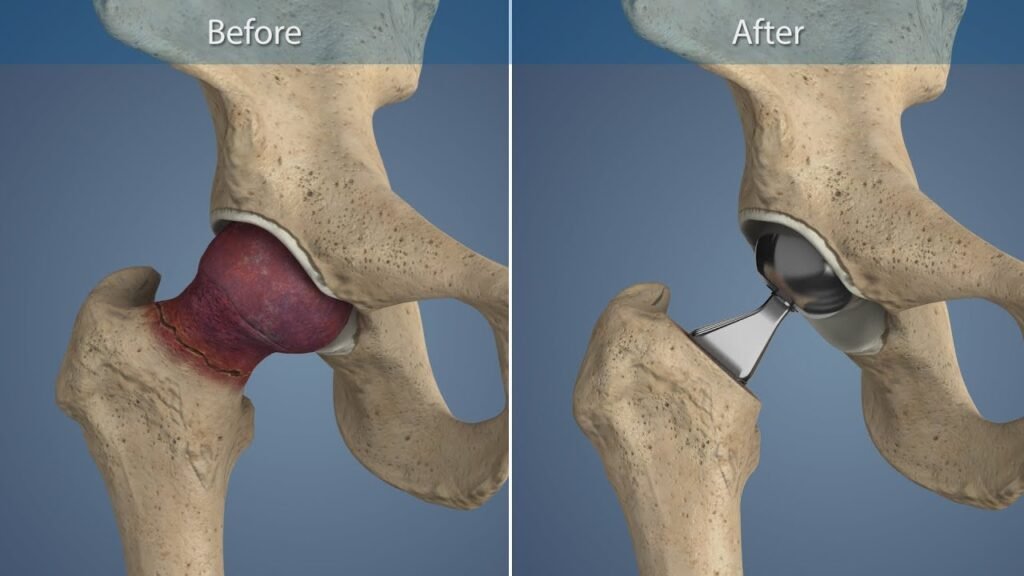
Partial Head Replacement: Restoring Function After Joint Degeneration or Injury
Partial head replacement, also known as partial joint replacement or hemiarthroplasty, is a surgical procedure designed to treat joint damage caused by conditions like arthritis, fractures, or degenerative diseases when only a portion of the joint is affected. The procedure involves replacing only the damaged part of the joint, such as the head of a bone, while leaving the healthy parts intact. This approach helps preserve as much of the natural joint as possible, offering significant pain relief and improved function without the need for a full joint replacement.
What is Partial Head Replacement?
Partial head replacement is commonly performed on joints such as the shoulder or hip. In this procedure, only the damaged portion of the joint—the head of the bone (humerus in the shoulder, femoral head in the hip)—is replaced with a prosthetic component, while the rest of the joint structure remains intact.
For instance, in a partial shoulder head replacement, the ball (humeral head) of the shoulder joint is replaced, while the socket (glenoid) remains unchanged. Similarly, in a partial hip head replacement, only the femoral head is replaced, while the acetabulum (hip socket) remains intact. This approach is suitable for patients who have isolated damage or arthritis in one part of the joint but still have healthy surrounding structures.
Benefits of Partial Head Replacement
- Preservation of Healthy Joint Tissue: Since only the damaged portion of the joint is replaced, partial head replacement helps preserve the healthy parts of the joint, maintaining more natural function and feeling.
- Pain Relief: The procedure is highly effective at alleviating joint pain caused by arthritis, fractures, or degenerative conditions, improving the overall comfort and mobility of the joint.
- Improved Function: By replacing the damaged bone with a prosthetic component, partial head replacement restores a significant range of motion and functionality, enabling you to perform everyday activities with greater ease.
- Minimally Invasive Approach: Compared to full joint replacement, partial head replacement typically involves less invasive surgery, resulting in smaller incisions, shorter recovery time, and less trauma to surrounding tissues.
- Faster Recovery: With the preservation of the natural joint structure and the reduced scope of the surgery, recovery times are often faster, and patients can return to their regular activities sooner.
- Long-Term Results: For patients with early to moderate joint degeneration, partial head replacement can provide long-term relief and improvement in joint function, often delaying the need for full joint replacement surgery.
Our Approach to Partial Head Replacement
- Comprehensive Evaluation: A detailed evaluation of your joint condition is conducted through physical examinations and imaging studies, such as X-rays or MRIs. This helps determine whether partial head replacement is the appropriate treatment for your specific needs.
- Personalized Treatment Plan: Based on your joint condition, activity level, and overall health, we develop a customized surgical plan tailored to provide optimal results. The appropriate prosthetic components are chosen to suit the structure of your joint.
- Advanced Surgical Techniques: The procedure is performed using modern surgical techniques that focus on precision, minimizing disruption to surrounding tissues, and enhancing post-surgery recovery. Where possible, minimally invasive methods are used to reduce the incision size and speed up healing.
- Post-Surgery Rehabilitation: Rehabilitation is a critical part of recovery after partial head replacement. A dedicated physical therapy program will help you restore strength, mobility, and function in your joint, allowing you to return to your normal activities as quickly as possible.
Who is a Candidate for Partial Head Replacement?
Partial head replacement is ideal for patients who:
- Have localized damage to the joint, such as arthritis, avascular necrosis, or fractures affecting only the head of the bone.
- Have a healthy socket (glenoid in the shoulder or acetabulum in the hip) and do not require a full joint replacement.
- Are experiencing significant pain and limited range of motion but still have good joint function in the remaining areas of the joint.
- Are relatively young or active and wish to avoid the more invasive nature of total joint replacement.
This procedure is particularly beneficial for patients with early-stage joint degeneration or those who are not yet candidates for a full joint replacement due to the condition of the joint.
Take the First Step Toward Restoring Joint Function
If you are suffering from joint pain and are seeking a solution that preserves the healthy parts of your joint, partial head replacement may be the right option. Contact us today to schedule a consultation and learn how this procedure can provide pain relief, restore function, and improve your quality of life.