
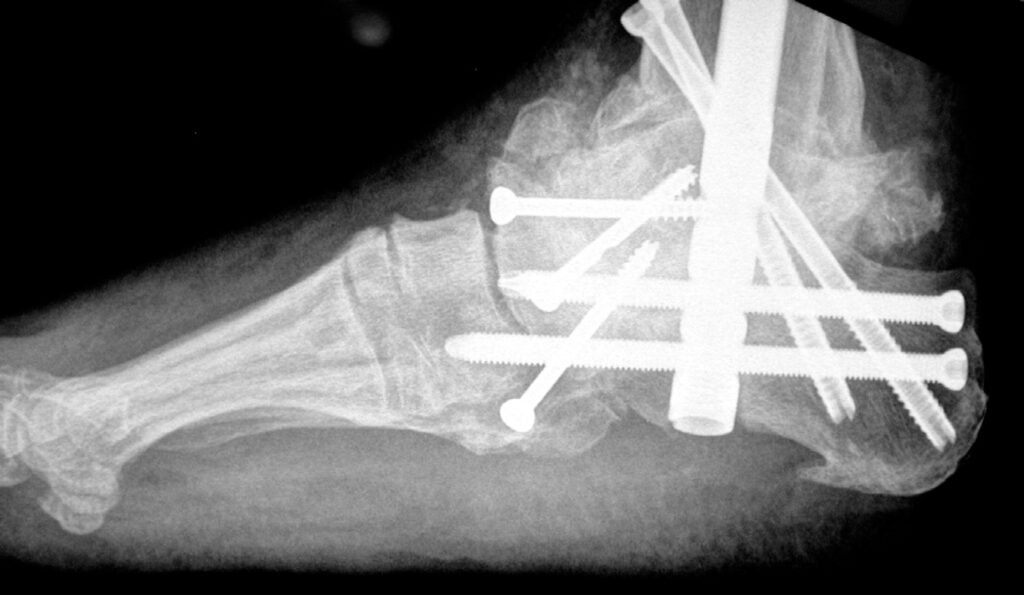
Pan Talar Arthrodesis: Restoring Stability and Function to the Foot
Pan talar arthrodesis is a surgical procedure aimed at relieving pain and restoring stability in patients with severe arthritis or other degenerative conditions affecting the joints of the foot. This procedure involves the fusion of the three main joints in the foot: the subtalar joint, talonavicular joint, and calcaneocuboid joint. It is typically considered when other treatment options, such as medications or less invasive surgeries, have failed to relieve symptoms.
Pan talar arthrodesis is a type of foot fusion surgery designed to treat severe arthritis or deformity that affects multiple joints in the foot. The procedure involves the surgical fusion (joining) of the talus bone with the surrounding bones in the foot, including the tibia and fibula, to eliminate pain, improve function, and prevent further joint degeneration. By fusing the joints together, the patient’s foot becomes more stable, and pain from arthritis or other conditions is significantly reduced.
Pan talar arthrodesis is typically recommended for patients with severe foot arthritis or conditions that lead to significant pain and deformity. Some common conditions that may be treated with this procedure include:
Severe Osteoarthritis: When arthritis has caused widespread joint damage, leading to significant pain, stiffness, and limited mobility.
Post-Traumatic Arthritis: Arthritis resulting from previous fractures or injuries to the foot, leading to joint degeneration and instability.
Rheumatoid Arthritis: An autoimmune condition that can affect multiple joints in the body, including those in the foot, causing pain and deformity.
Flatfoot Deformity: A condition where the arch of the foot collapses, causing misalignment of the joints and leading to pain and instability.
Charcot Foot Disease: A progressive condition where the bones in the foot weaken, potentially leading to deformity and fractures that require surgical intervention.
Talar Fractures: Severe fractures of the talus bone, especially when conservative treatments are not effective in restoring function and relieving pain.
The goal of pan talar arthrodesis is to fuse the joints of the foot to stop pain and restore the functional alignment of the foot and ankle. The procedure is typically performed under general or regional anesthesia, and the steps include:
Pre-Surgical Evaluation:
Surgical Procedure:
Post-Surgical Care:
Recovery from pan talar arthrodesis typically takes several months, and the process is highly dependent on the individual’s health and adherence to rehabilitation guidelines. The general recovery process includes:
Initial Recovery:
Physical Therapy:
Long-Term Care:
Potential Complications:
Pan talar arthrodesis is typically recommended for patients who:
Your orthopedic surgeon will perform a thorough evaluation to determine if pan talar arthrodesis is the best option for you, based on your symptoms, medical history, and foot condition.
If you suffer from severe foot arthritis, deformity, or instability that affects your ability to walk or perform daily tasks, pan talar arthrodesis surgery may offer a solution. By fusing the damaged joints, this procedure can provide significant pain relief, improve stability, and restore function to the foot, allowing you to return to an active lifestyle with greater comfort.
If you are experiencing chronic foot pain or instability that has not responded to other treatments, pan talar arthrodesis may be the solution to restore your quality of life. Contact us today to schedule a consultation with an orthopedic surgeon and discuss whether this procedure is right for you.

Expert in trauma care, sports medicine, joint replacement, and deformity correction, delivering advanced orthopedic solutions with precision and care.
Copyright @ 2024. All rights reserved. Designed by AppAdd India Pvt Ltd…