
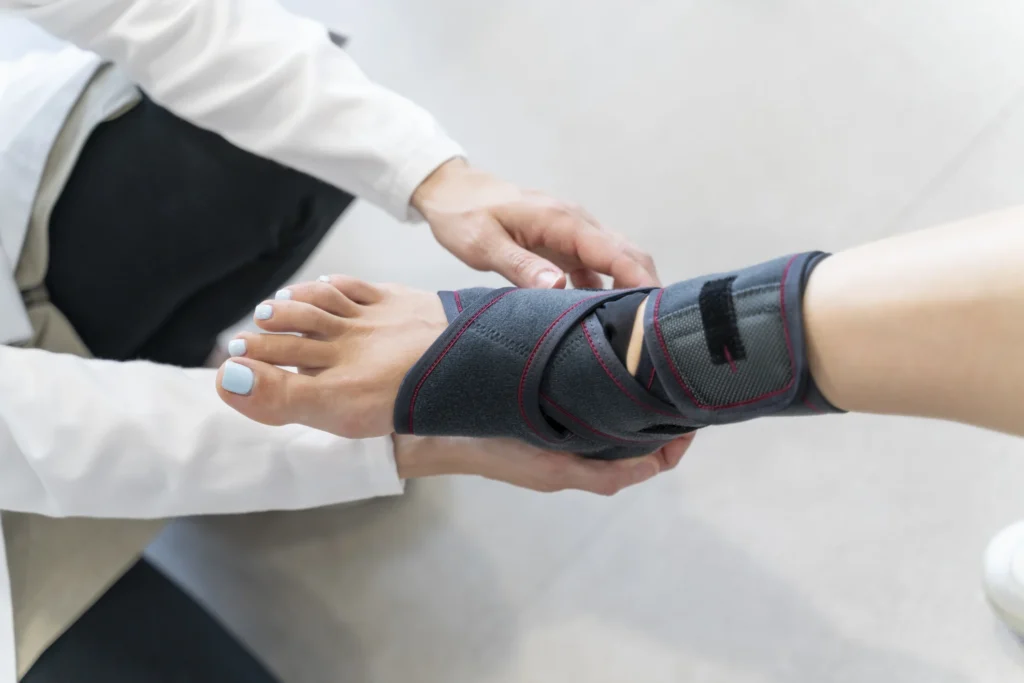
Ankle Instability Surgeries: Restoring Strength and Stability to Your Ankle
Ankle instability refers to a condition in which the ankle joint repeatedly gives way, often due to a previous injury like a sprain that hasn’t healed properly. This can lead to persistent pain, swelling, and an increased risk of further injury. If conservative treatments such as physical therapy or bracing are no longer effective, ankle instability surgeries can offer a solution to restore stability, reduce pain, and help you return to an active lifestyle.
Ankle instability occurs when the ligaments surrounding the ankle joint become weak, stretched, or torn. This can result in repeated ankle sprains or a feeling of the ankle “giving way,” especially during physical activities like walking, running, or sports. The condition is often caused by:
Chronic Ankle Sprains: Repeated sprains that don’t heal properly can stretch the ligaments, leading to long-term instability.
Ligament Tears or Ruptures: A significant injury to the ligaments can result in an unstable ankle that frequently gives way.
Previous Ankle Fractures: Fractures can disrupt the stability of the joint, leading to ongoing problems with mobility and balance.
Inadequate Rehabilitation: Not properly rehabilitating an ankle sprain can result in long-term instability, leaving the joint vulnerable to future injuries.
Patients with ankle instability may experience the following symptoms:
Conservative treatments like rest, physical therapy, bracing, and anti-inflammatory medications are often used in the early stages of ankle instability. However, if these treatments do not provide relief and symptoms persist, surgery may be necessary to repair the damaged ligaments and restore the ankle’s stability.
Lateral Ligament Reconstruction:
Broström Procedure:
Ankle Arthroscopy:
Tendon Transfer Surgery:
Ankle Fusion (Arthrodesis):
You may be a candidate for ankle instability surgery if:
An orthopedic surgeon will evaluate your condition through physical examinations and diagnostic imaging (X-rays, MRI) to determine whether surgery is necessary and which procedure is most suitable for you.
Pre-Operative Evaluation:
Anesthesia:
Surgical Procedure:
Post-Surgical Care:
Initial Recovery: After surgery, you will need to rest the ankle and avoid weight-bearing activities for a few weeks. Swelling is common, and pain management will be closely monitored. The first few days after surgery are critical for healing, and your surgeon will provide instructions on elevating and icing the ankle to minimize swelling.
Physical Therapy: Rehabilitation is an essential part of recovery from ankle instability surgery. Physical therapy will help restore strength, flexibility, and balance in the ankle. Initially, therapy focuses on range-of-motion exercises, followed by strengthening exercises as healing progresses.
Long-Term Care: Full recovery from ankle instability surgery typically takes several months. Regular follow-up visits with your orthopedic surgeon will help monitor the progress of your recovery. With proper rehabilitation, most patients can return to their normal activities within 4–6 months after surgery.
Ankle instability surgery can provide long-term relief from pain and instability, restoring function and improving quality of life. If you suffer from chronic ankle instability that affects your ability to perform daily tasks or engage in sports, surgery may be the solution to prevent further injury and enable you to return to an active lifestyle.
If you are experiencing persistent ankle instability or have been struggling with recurrent sprains, ankle instability surgery may be the key to relieving pain and restoring function. Contact us today to schedule a consultation with an orthopedic surgeon to discuss your treatment options and learn how ankle surgery can improve your quality of life.

Expert in trauma care, sports medicine, joint replacement, and deformity correction, delivering advanced orthopedic solutions with precision and care.
Copyright @ 2024. All rights reserved. Designed by AppAdd India Pvt Ltd…