
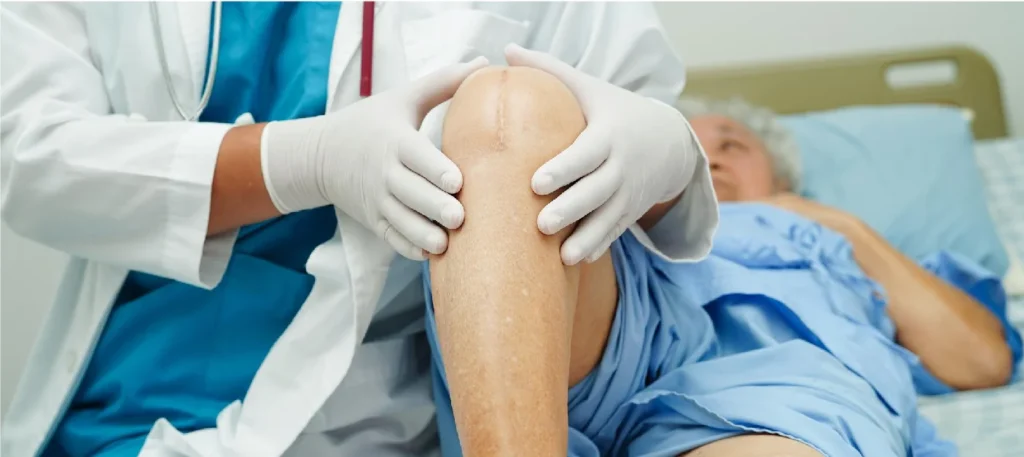
Knee Arthroplasty Surgery: A Path to Pain-Free Movement and Improved Quality of Life
Knee arthroplasty, commonly known as knee replacement surgery, is a highly effective treatment for individuals suffering from knee joint arthritis, severe knee pain, or knee deformities that impair daily activities. The procedure involves replacing the damaged or diseased parts of the knee joint with artificial components, helping restore normal function and alleviate pain. Whether you’re dealing with osteoarthritis, rheumatoid arthritis, or knee injuries, knee arthroplasty can significantly improve mobility and quality of life.
Knee arthroplasty surgery involves the removal of damaged or worn-out knee joint surfaces and the replacement of these parts with artificial prosthetic components. The procedure can be performed as:
Total Knee Arthroplasty (TKA): This is the most common form of knee replacement surgery, where both the femoral component (thigh bone), tibial component (shin bone), and sometimes the patella (kneecap) are replaced with artificial parts.
Partial Knee Arthroplasty (PKA): Also known as a unicompartmental knee replacement, this involves replacing only the part of the knee that is damaged, preserving the healthy portions of the joint. It is typically recommended for individuals with localized knee arthritis.
Knee arthroplasty is commonly recommended for patients suffering from:
Osteoarthritis: The most common cause of knee arthritis, leading to the breakdown of cartilage, causing pain, stiffness, and decreased mobility.
Rheumatoid Arthritis: An autoimmune disorder that causes inflammation and damage to the knee joint, leading to pain and deformity.
Post-Traumatic Arthritis: Arthritis that develops after a knee injury, such as fractures or ligament damage, often leading to knee pain and instability.
Knee Deformities: Conditions such as bow-leggedness or knock-knees that cause misalignment and stress on the knee joint, often resulting in pain and limited range of motion.
Avascular Necrosis: A condition where the blood supply to the femoral head is disrupted, causing bone death and collapse, leading to joint damage and pain.
Severe Knee Injuries: In cases of significant ligament or cartilage damage that cannot be repaired with other treatments, knee arthroplasty may be necessary to restore function.
Total Knee Arthroplasty (TKA): The most common form of knee replacement surgery, where the damaged surfaces of the femur, tibia, and sometimes the patella are replaced with prosthetic components. This option is typically recommended for patients with widespread arthritis or severe knee damage.
Partial Knee Arthroplasty (PKA): In this procedure, only the damaged portion of the knee joint is replaced, preserving the healthy areas of the knee. This is an ideal option for patients with localized knee arthritis and good overall knee function.
Patellofemoral Knee Arthroplasty: This procedure involves the replacement of only the patellofemoral joint (the joint between the kneecap and thigh bone) when the arthritis is confined to this area.
Knee arthroplasty is typically recommended for individuals who:
Your orthopedic surgeon will evaluate your condition through a detailed history, physical exam, and imaging studies (X-rays, MRI) to determine if knee arthroplasty is the best option for you.
Pre-Operative Assessment: Before surgery, your surgeon will perform a thorough evaluation, including a review of your medical history and diagnostic imaging, to assess the extent of damage and determine the appropriate type of knee replacement.
Anesthesia: Knee arthroplasty is usually performed under general anesthesia or regional anesthesia (spinal or epidural), which ensures you are comfortable and pain-free during the procedure.
Surgical Procedure: The surgeon will make an incision over the knee to access the joint. The damaged portions of the femur, tibia, and patella are then removed, and the prosthetic components are implanted. The artificial joint is designed to mimic the natural movement of the knee and restore normal function.
Post-Surgical Care: After surgery, you will be closely monitored for pain management and any complications. Most patients stay in the hospital for 1-3 days, after which you will begin physical therapy to help regain mobility and strength.
Initial Recovery: After knee replacement surgery, patients typically stay in the hospital for 1 to 3 days. Pain management and initial physical therapy are key to promoting recovery. You will begin walking with assistance within a day or two after surgery.
Physical Therapy: Rehabilitation is an essential part of the recovery process. A personalized physical therapy program will help restore knee strength, flexibility, and range of motion. Most patients can resume light activities within 4 to 6 weeks, while full recovery may take 3 to 6 months, depending on individual progress.
Long-Term Care: Regular follow-up visits with your surgeon will monitor the condition of the implant and ensure that the knee is healing properly. Your surgeon may advise lifestyle modifications and low-impact exercises to help extend the life of the implant.
Knee arthroplasty is one of the most successful orthopedic procedures, with a high success rate and patient satisfaction. It offers a life-changing solution for individuals suffering from chronic knee pain and immobility, allowing them to return to their daily activities and enjoy a better quality of life. With the advancement in implant technology, knee replacements are more durable and effective than ever before.
If you are experiencing knee pain, stiffness, or immobility that is affecting your quality of life, knee arthroplasty surgery could be the solution you need to restore function, alleviate pain, and regain independence. Contact us today to schedule a consultation and learn how knee replacement surgery can improve your life.

Expert in trauma care, sports medicine, joint replacement, and deformity correction, delivering advanced orthopedic solutions with precision and care.
Copyright @ 2024. All rights reserved. Designed by AppAdd India Pvt Ltd…