Reverse Total Shoulder Replacement: A Solution for Severe Shoulder Arthritis and Rotator Cuff Dysfunction
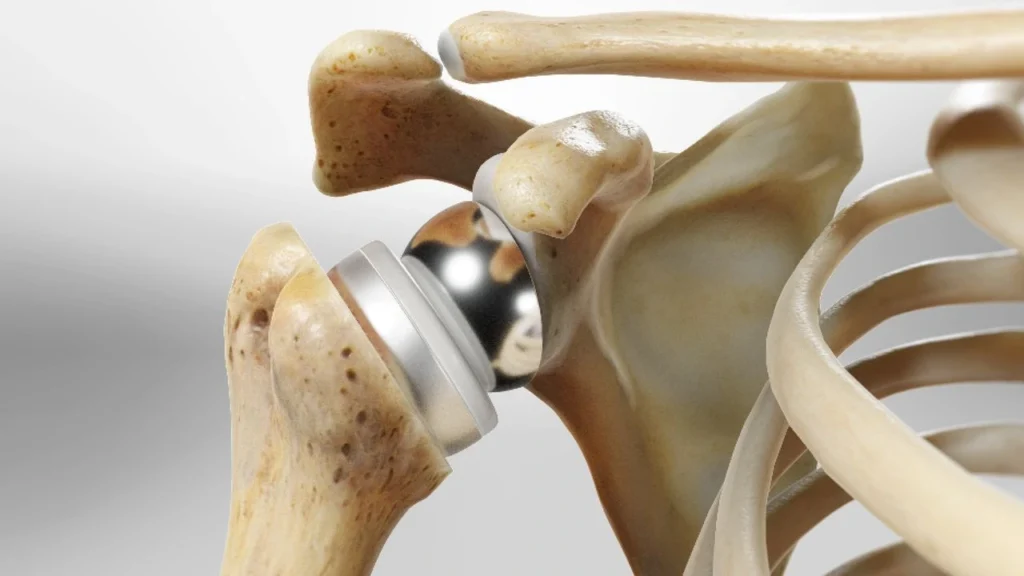
Reverse total shoulder replacement (RTSA) is an advanced surgical procedure designed to treat patients with severe shoulder arthritis combined with rotator cuff dysfunction. In this procedure, the normal anatomy of the shoulder joint is “reversed,” meaning the ball (humeral head) is attached to the shoulder socket (glenoid), and the socket is attached to the upper arm bone (humerus). This unique approach improves shoulder function and allows patients to regain mobility and relieve pain, even in cases of severe rotator cuff damage.
What is Reverse Total Shoulder Replacement?
In a normal shoulder joint, the ball (humeral head) fits into the socket (glenoid), and the rotator cuff muscles allow for smooth movement of the joint. However, in cases of severe shoulder arthritis or rotator cuff arthropathy (degeneration of the rotator cuff muscles), this normal anatomy is disrupted, causing pain and limited function.
Reverse total shoulder replacement “reverses” the normal anatomy of the shoulder by swapping the positions of the ball and socket. The prosthetic components used in RTSA are designed to compensate for the loss of rotator cuff function by allowing other muscles (specifically the deltoid) to control the motion of the shoulder. This innovative design restores function, alleviates pain, and helps improve the quality of life for patients with complex shoulder problems.
Benefits of Reverse Total Shoulder Replacement
- Pain Relief: RTSA is highly effective at relieving pain associated with shoulder arthritis, rotator cuff tears, and shoulder deformities. This is especially beneficial for patients who have not responded to nonsurgical treatments.
- Restored Mobility: By improving the mechanics of the shoulder joint, RTSA can restore a significant range of motion and improve the ability to perform daily activities like reaching overhead, lifting, and even dressing.
- Improved Function: Reverse shoulder replacement enables the deltoid muscle to take over the function of the rotator cuff, which can help patients regain the ability to lift and move their arm, especially in cases where the rotator cuff is severely damaged or torn.
- Enhanced Quality of Life: After recovery, many patients experience a substantial improvement in their quality of life, with reduced pain, better joint function, and the ability to return to a more active lifestyle.
- Successful in Complex Cases: RTSA is often the preferred solution for patients with rotator cuff arthropathy (shoulder arthritis combined with a torn rotator cuff), failed previous surgeries, or severe shoulder deformities, offering an option when other shoulder surgeries might not be effective.
Our Approach to Reverse Total Shoulder Replacement
- Comprehensive Evaluation: Before surgery, a thorough evaluation is conducted, including physical examination, medical history review, and advanced imaging such as X-rays and MRI. This helps determine whether reverse total shoulder replacement is the right treatment option.
- Customized Surgical Plan: Based on your condition, age, activity level, and general health, a personalized surgical plan is developed. We carefully select the appropriate prosthetic components and surgical technique to achieve the best outcomes.
- Advanced Surgical Techniques: The procedure is performed using state-of-the-art techniques to ensure the correct alignment and placement of the prosthetic components. Minimally invasive options may be used where possible to reduce muscle disruption, pain, and recovery time.
- Post-Surgery Rehabilitation: A structured rehabilitation program is essential for the success of RTSA. A customized physical therapy plan will help you regain strength, flexibility, and function, ensuring that you get the most out of your shoulder replacement.
Who is a Candidate for Reverse Total Shoulder Replacement?
Reverse total shoulder replacement is recommended for patients who:
- Have severe arthritis or shoulder degeneration with rotator cuff dysfunction, where the rotator cuff muscles are too damaged to function properly.
- Have a history of failed rotator cuff surgery or other shoulder procedures.
- Are experiencing significant pain and loss of mobility in the shoulder, especially if other surgical treatments (like traditional shoulder replacement) are not viable.
- Are over the age of 60 (though it may be suitable for younger patients with appropriate indications).
Reverse total shoulder replacement is typically recommended when other less invasive treatment options, such as physical therapy or medication, have not been effective.
Take the First Step Toward Shoulder Relief
If you are suffering from severe shoulder arthritis or rotator cuff dysfunction, reverse total shoulder replacement may be the ideal solution to restore your shoulder’s function and alleviate pain. Contact us today to schedule a consultation and learn how this advanced procedure can improve your mobility, quality of life, and overall shoulder health.