
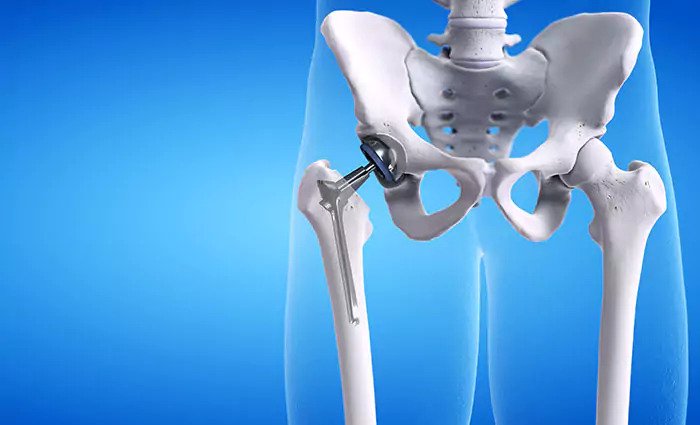
Total hip replacement

Total Hip Replacement: A Lifelong Solution for Hip Pain

Total Hip Replacement (THR) is a highly effective and life-changing surgical procedure for individuals suffering from chronic hip pain and limited mobility due to hip arthritis, fractures, or other degenerative conditions. When nonsurgical treatments such as medications and physical therapy no longer provide relief, a total hip replacement can restore function, relieve pain, and significantly improve quality of life.

What is Total Hip Replacement?

Total Hip Replacement, also known as hip arthroplasty, involves the removal of a damaged or diseased hip joint and its replacement with an artificial joint, or prosthesis. The hip joint consists of two parts: the femoral head (ball) and the acetabulum (socket). In total hip replacement surgery, both of these components are replaced with prosthetic parts made from durable materials like metal, ceramic, or plastic.

This procedure is typically performed to treat conditions such as:

  1. Osteoarthritis: A degenerative joint disease that causes pain, stiffness, and swelling.
  2. Rheumatoid Arthritis: An autoimmune disease that causes inflammation in the joints.
  3. Hip Fractures: Breaks in the hip bone due to trauma or osteoporosis.
  4. Avascular Necrosis: A condition where blood flow to the hip joint is disrupted, causing the bone to die and the joint to collapse.

Benefits of Total Hip Replacement

  1. Pain Relief: The primary goal of total hip replacement is to eliminate the chronic pain caused by hip arthritis, fractures, or other conditions. Most patients experience significant pain relief after surgery.
  2. Improved Mobility: Total hip replacement can help restore mobility, allowing patients to return to normal activities such as walking, climbing stairs, and exercising without discomfort.
  3. Restoration of Function: The procedure improves joint function by replacing the damaged hip joint with a prosthesis that mimics the natural motion of the hip, allowing for better movement and flexibility.
  4. Long-Lasting Results: With modern materials and surgical techniques, total hip replacements are designed to last for many years, often 15-20 years or longer, with proper care and rehabilitation.

Our Approach to Total Hip Replacement

  1. Comprehensive Evaluation: A detailed evaluation, including physical examination, medical history review, and imaging studies (such as X-rays and MRI), is conducted to assess the condition of your hip joint and determine if a total hip replacement is the best option.
  2. Customized Surgical Plan: Based on your age, activity level, and overall health, a personalized treatment plan is developed. This may include choosing the right type of prosthesis and surgical approach (traditional or minimally invasive).
  3. Advanced Surgical Techniques: We use cutting-edge surgical techniques to perform total hip replacement. The procedure may be done through a traditional approach or minimally invasive methods, which involve smaller incisions, less muscle disruption, and quicker recovery times.
  4. High-Quality Prosthetics: The prosthetic components used in total hip replacement are made from advanced materials, such as ceramic, metal, and high-density polyethylene, which provide durability, reduce wear, and mimic the natural function of the hip joint.
  5. Post-Surgery Rehabilitation: A well-structured rehabilitation plan is essential for a successful recovery. This includes physical therapy to help you regain strength, flexibility, and range of motion, ensuring that you can return to an active lifestyle as soon as possible.

Who is a Candidate for Total Hip Replacement?

Total Hip Replacement is typically recommended for patients who:

  1. Experience chronic pain and limited mobility due to conditions such as osteoarthritis, rheumatoid arthritis, or hip fractures.
  2. Have tried conservative treatments such as medications, physical therapy, and injections but have not found relief.
  3. Are unable to perform everyday activities such as walking, climbing stairs, or getting in and out of chairs because of hip pain.
  4. Are in good overall health and have realistic expectations about the recovery process.

Take the First Step Toward a Pain-Free Life

If you are suffering from chronic hip pain or stiffness, total hip replacement may be the solution you’ve been looking for. Contact us today to schedule a consultation and learn how this advanced procedure can provide long-lasting pain relief, improved function, and a better quality of life.
