
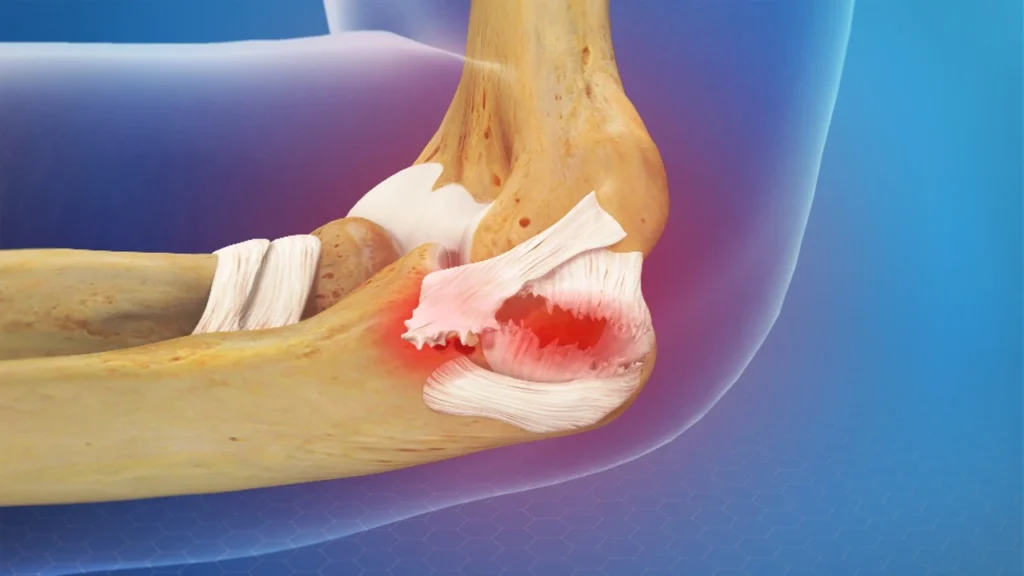
Elbow ligament injuries are common in sports and activities that involve repetitive arm motion, such as throwing or weightlifting. The elbow joint is stabilized by several ligaments, including the ulnar collateral ligament (UCL) and the radial collateral ligament (RCL). Injuries to these ligaments can lead to pain, instability, and limited movement, and are especially common in athletes, particularly those involved in throwing sports.
Overuse and Repetitive Motion: Repeated stress on the elbow from activities like baseball pitching, tennis, or weightlifting can overstretch and weaken the ligaments over time, leading to small tears and eventual ligament damage.
Acute Trauma: A direct blow to the elbow, sudden hyperextension, or falling onto an outstretched hand can cause an acute ligament tear, especially in contact sports or accidents.
Improper Technique: Poor form during sports or exercise can put unnecessary strain on the elbow ligaments, increasing the risk of injury.
Weak Muscles and Lack of Flexibility: Weakness in the muscles surrounding the elbow or limited flexibility can cause additional stress on the ligaments, making them more prone to injury.
Non-Surgical Management (RICE Protocol):
Physical Therapy: Rehabilitation focuses on strengthening the muscles around the elbow to provide stability and improve flexibility. Exercises may include gentle stretches and range-of-motion exercises to maintain joint mobility, followed by strengthening exercises for the forearm, biceps, and triceps.
Bracing: Wearing a supportive elbow brace can help stabilize the joint and protect the injured ligament during recovery.
Anti-Inflammatory Medications: NSAIDs like ibuprofen may help reduce pain and inflammation, allowing for a more comfortable healing process.
Injections: Corticosteroid injections may be used to reduce inflammation in the short term, though they are generally not recommended for long-term use as they can weaken soft tissues over time.
Surgical Repair or Reconstruction: For severe or complete ligament tears, surgery may be necessary. UCL reconstruction (often called Tommy John surgery) is common among athletes and involves replacing the damaged ligament with a tendon graft from another part of the body.
Rehabilitation Post-Surgery: A structured rehabilitation plan following surgery is critical to restoring elbow function, flexibility, and strength. Rehab exercises will gradually progress in intensity, with the ultimate goal of returning to normal activity and sports.
With proper treatment and rehabilitation, most individuals with elbow ligament injuries can restore full elbow function and return to their activities with minimized risk of long-term complications.

Expert in trauma care, sports medicine, joint replacement, and deformity correction, delivering advanced orthopedic solutions with precision and care.
Copyright @ 2024. All rights reserved. Designed by AppAdd India Pvt Ltd…