
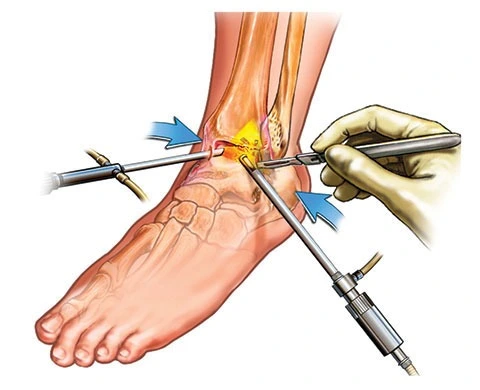
Ankle Osteochonridritis

Ankle osteochondritis, often referred to as osteochondritis dissecans (OCD) of the talus, is a joint condition where a fragment of cartilage, and sometimes underlying bone, detaches or weakens within the ankle joint. This can lead to pain, swelling, stiffness, and, in severe cases, joint instability. The talus bone, located at the top of the ankle and responsible for smooth movement of the foot, is most commonly affected in this condition.

Key Causes of Ankle Osteochondritis:

  1. Trauma or Injury: A twisting injury, ankle sprain, or repetitive impact to the ankle can disrupt blood flow to the talus, leading to cartilage and bone damage.

  2. Repetitive Stress: Overuse or repetitive movements, especially in high-impact sports like running, gymnastics, or basketball, can stress the talus, causing cartilage wear and degeneration.

  3. Genetic Predisposition: Some individuals may be genetically prone to osteochondritis, as it can sometimes occur without any specific injury.

  4. Developmental Factors: In children and adolescents, bones are still developing, making the joint cartilage more vulnerable to injury.

Symptoms of Ankle Osteochondritis:

  1. Ankle Pain: Deep, aching pain within the ankle joint, particularly with weight-bearing activities.
  2. Swelling and Tenderness: Swelling around the ankle and tenderness over the affected area.
  3. Joint Locking or Catching: A sensation of the ankle “locking” or “catching” during movement, often due to loose cartilage or bone fragments.
  4. Limited Range of Motion: Stiffness or reduced flexibility, making it difficult to fully move the ankle up or down.
  5. Instability: In severe cases, the ankle may feel unstable or “give way” during walking or physical activity.

Treatment Options:

  1. Conservative Management:

    • Rest: Limit weight-bearing activities to allow the joint to heal and reduce stress on the talus.
    • Ice: Apply ice to reduce pain and inflammation around the joint.
    • Bracing or Immobilization: A cast or brace may be recommended to stabilize the ankle and protect it from further stress.
    • Non-Steroidal Anti-Inflammatory Drugs (NSAIDs): Medications like ibuprofen can help relieve pain and swelling.
  2. Physical Therapy: Once pain and swelling are under control, physical therapy can help restore range of motion, improve flexibility, and strengthen the muscles around the ankle to enhance stability.

  3. Injections: In some cases, injections of corticosteroids or hyaluronic acid may be used to reduce inflammation and provide temporary relief.

  4. Surgical Options: Surgery may be recommended for severe or non-healing lesions to remove loose fragments, stimulate cartilage repair, or, in some cases, perform a bone graft. Surgical options include:

    • Arthroscopy: Minimally invasive surgery to remove loose fragments and smooth rough edges of damaged cartilage.
    • Microfracture Surgery: Small holes are drilled into the bone to stimulate new cartilage growth.
    • Osteochondral Autograft Transplantation (OATS): A procedure where healthy cartilage from a non-weight-bearing area is transplanted to the damaged area.
  5. Rehabilitation: Post-surgical rehabilitation focuses on regaining strength, restoring range of motion, and gradually returning to activity to minimize the risk of re-injury.

Key Benefits of Ankle Osteochondritis Rehabilitation:

  1. Pain Reduction: Exercises and therapy help reduce pain by strengthening the surrounding muscles and stabilizing the joint.
  2. Improved Joint Function: Therapy improves joint mobility and flexibility, allowing better control of movement.
  3. Enhanced Stability: Strengthening exercises support the ankle, reducing the risk of future instability.
  4. Increased Range of Motion: Stretching and mobility exercises help restore natural ankle movement.
  5. Injury Prevention: Rehabilitation reduces the risk of recurrent injury by stabilizing and strengthening the ankle joint.

When to Consider Ankle Osteochondritis Rehabilitation:

  1. After Initial Diagnosis: Early physical therapy can help manage symptoms, improve joint function, and prepare the ankle for further treatment if necessary.
  2. Following Surgery: Post-operative rehabilitation is crucial for restoring normal ankle function and supporting a safe return to activities.
  3. To Enhance Stability and Function: Strengthening and mobility exercises improve ankle stability for both surgical and non-surgical cases.
  4. To Prevent Recurrence: A strong rehabilitation plan can reduce the risk of future injuries and joint degeneration.

With proper treatment and rehabilitation, individuals with ankle osteochondritis can restore joint function, reduce pain, and maintain an active lifestyle with minimized risk of long-term complications.
