
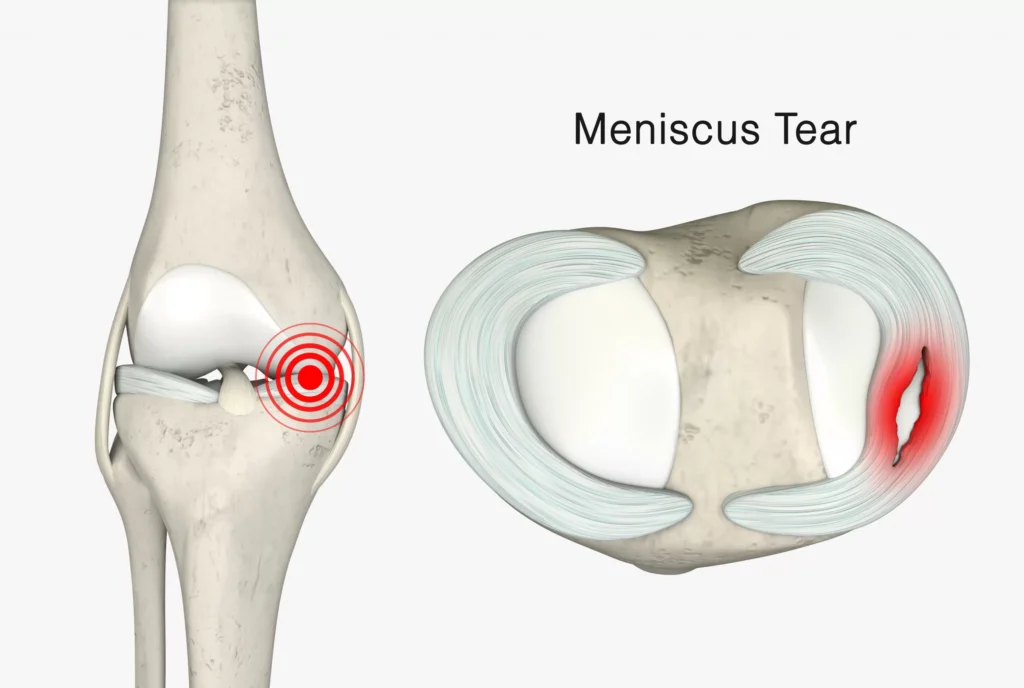
A meniscal tear is a common knee injury affecting the meniscus, a C-shaped piece of cartilage that cushions the knee joint and aids in stability, shock absorption, and weight distribution. Meniscal tears are common among athletes in contact sports or activities involving sudden twists or turns, but they can also occur from general wear and tear in aging adults.
Twisting Movements: A sudden twist or pivot while the foot is planted can place stress on the knee and tear the meniscus, especially during sports like basketball, soccer, or tennis.
Direct Impact: A forceful hit to the knee can compress the meniscus, resulting in a tear, commonly seen in contact sports such as football or rugby.
Degenerative Changes: Over time, the meniscus can weaken and become more prone to tears, especially in people over 40 or those with arthritis.
Heavy Lifting or Squatting: Frequent squatting or lifting heavy objects puts extra pressure on the knee joint, increasing the risk of a meniscal tear.
Non-Surgical Management (RICE Protocol):
Physical Therapy: A structured physical therapy program can help restore knee function, improve strength, and enhance flexibility. Therapy often includes exercises to strengthen the quadriceps and hamstring muscles to support the knee joint.
Medications: Nonsteroidal anti-inflammatory drugs (NSAIDs) like ibuprofen may help reduce pain and inflammation.
Surgery: For severe or persistent meniscal tears that do not respond to conservative treatment, arthroscopic surgery may be recommended. Options include:
Rehabilitation: After surgery or physical therapy, rehabilitation focuses on rebuilding knee strength, stability, and range of motion. A gradual increase in exercise intensity is important to ensure complete recovery without re-injury.
Meniscal tear rehabilitation is essential for returning to daily activities and sports while maintaining knee health. With proper management and treatment, individuals with a meniscal tear can regain full functionality and minimize the risk of long-term complications.

Expert in trauma care, sports medicine, joint replacement, and deformity correction, delivering advanced orthopedic solutions with precision and care.
Copyright @ 2024. All rights reserved. Designed by AppAdd India Pvt Ltd…